A Voice Across the Ocean
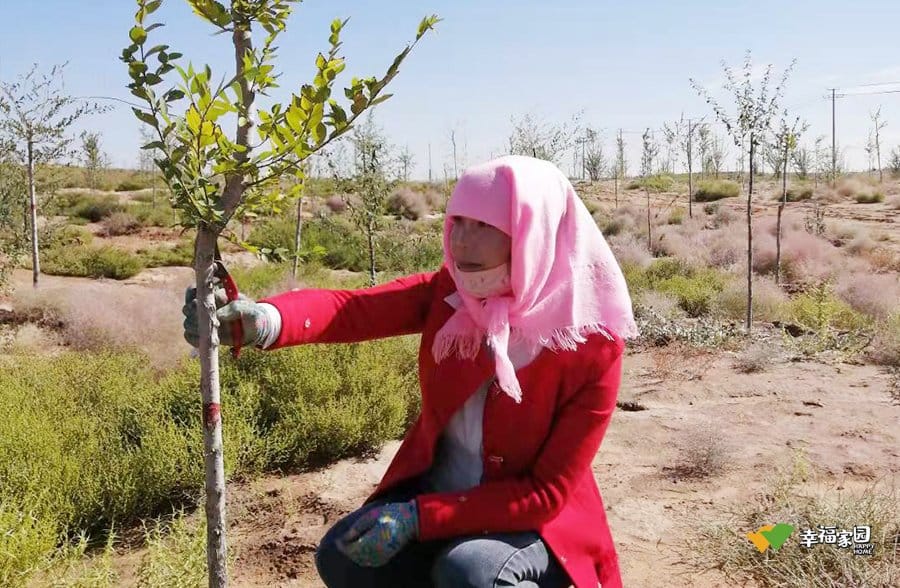
Not long ago, a video circulated online of a weathered woman standing in a forest she planted with her own hands. She looked into the camera and spoke in rough Mandarin, direct and unpolished:
"Hello, Mr. Sai Kesi. If you can see this video, I sincerely invite you to come back to China and see the green forest that your US dollars helped plant. Your 5,000 dollars have grown into more than 50,000 towering trees."
The woman is Yin Yuzhen. She is a national model worker in China, and she has spent the last forty years turning a patch of the Maowusu Sandy Land in Inner Mongolia into an oasis. The American she's calling out to is someone she hasn't spoken to in over two decades.
This is the story of how they connected, what happened in between, and why she still won't let it go.
Forty Years in the Sand
Yin Yuzhen was born in 1966 in Jingbian County, Shaanxi Province, right on the edge of the Maowusu. She married into a family in Inner Mongolia and found herself living in a house half-buried in sand. No roads. No neighbors within walking distance. Just dunes and wind and more dunes.
Most people would have left. Yin Yuzhen started planting trees.
She had no training. No budget. No machinery. She hauled water from a well, dug holes with a shovel, and planted seedlings one at a time. Many died. She planted more. When she ran out of money, she sold the family's only valuable possession — a sheep. She bought more seedlings.
Year after year, she expanded the green patch around her home. Neighbors who had left started coming back. The sand stopped advancing. Then it started retreating.
Over four decades, Yin Yuzhen has planted over a million trees across roughly 70,000 mu (about 11,500 acres) of former desert. The area is now a thriving woodland with wildlife, shade, and soil that can actually hold water.
The American Connection
In 1999, an American named Sai Kesi (the Chinese transliteration of what is likely "Sikes" or a similar surname) came across a news report about Yin Yuzhen's tree-planting efforts in the Maowusu. He was moved by her story and donated 5,000 US dollars to help her buy seedlings and continue her work.
At the time, 5,000 dollars was a significant amount of money in rural Inner Mongolia. It translated to roughly 40,000 yuan — enough to buy thousands of quality saplings that Yin Yuzhen could never have afforded on her own.
That money arrived at the lowest point in her planting journey. She had been running on fumes, selling off livestock and borrowing from anyone who would lend. The donation didn't just buy trees. It bought time. It bought hope.
"When I was at my most difficult moment, he gave me a large sum of money that let me buy so many high-quality seedlings. I have never forgotten it. I carry it in my heart."
Lost and Found
After the initial exchange, the two lost contact. Letters went unanswered. Addresses changed. The internet wasn't what it is now. Yin Yuzhen had no way to track down a man whose full name she wasn't even sure about.
But she never stopped thinking about him. She kept his photo in the presentation slides she uses when giving talks about her work. She asked every foreign visitor she met if they knew anyone named Sai Kesi. She traveled to events across China, mentioning him in interviews, hoping someone would recognize the name.
Now she has turned to the internet. The video of her standing in her forest, calling out to a man she met once twenty-seven years ago, struck a nerve. People shared it. Journalists picked it up. Someone set up a search.
"I am desperate to see Sai Kesi. I want to say thank you. I am waiting for you in the desert."
Why This Story Matters
There are plenty of feel-good stories about tree planting and environmental recovery. This one hits different because it's not just about ecology. It's about the kind of person who spends forty years doing backbreaking work in a desert and still thinks first about the stranger who helped her when she needed it.
Yin Yuzhen didn't plant a million trees for fame or profit. She did it because the sand was burying her home and she refused to let that happen. And when someone reached across the world to help, she didn't forget. Twenty-seven years later, standing in a forest that exists because of her stubbornness and his generosity, she is still looking for him.
Five thousand dollars. That is what it cost to help a woman change a desert. The return on that investment is 50,000 trees and counting, an ecosystem restored, and a story that refuses to end.
If Sai Kesi is out there reading this — she is still waiting.